Announcement: My eQuals has a new website! Learn more about it here.
My eQuals Connect 2026: Making learning count across connected journeys
How do we make sure that learning continues to count, wherever someone goes next?
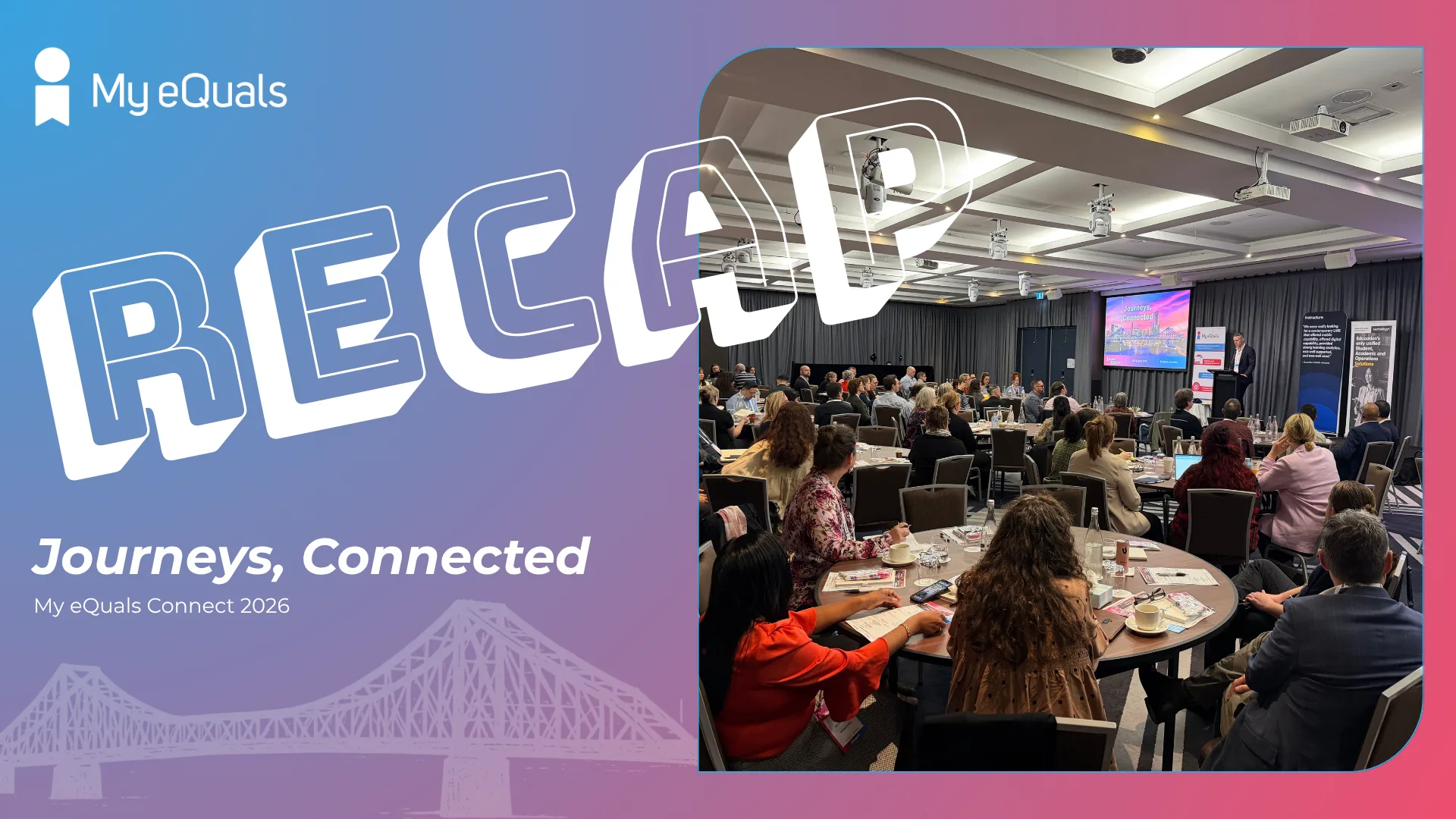
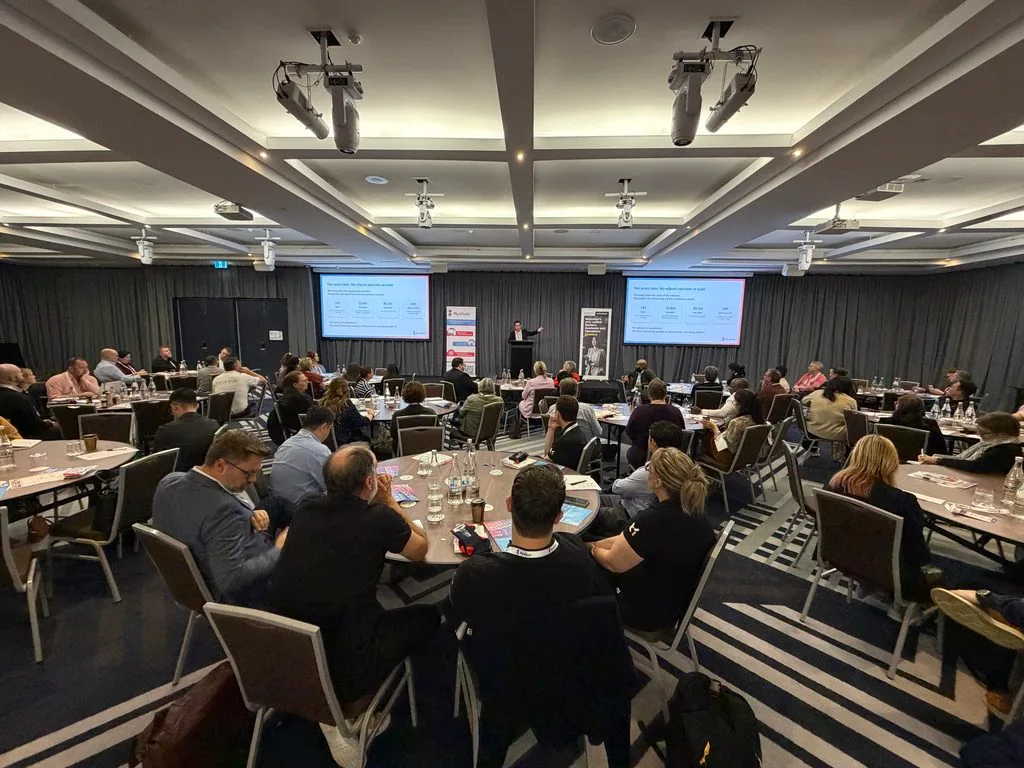
That question connected the conversations at My eQuals Connect 2026, held in Brisbane on 25 August under the theme “Journeys, Connected”.
Across the day, speakers explored the relationship between learning, credentials and recognition. The discussion reached beyond how credentials are issued to consider what happens afterwards: how learners understand their achievements, how institutions and employers interpret them, and how trusted evidence can remain useful through changes in education, employment and life.
From practical improvements to the student experience to bigger questions about trust, capability and credit recognition, the programme offered both immediate lessons and ideas for the years ahead.
Learning is a web, not a ladder
Professor Carolyn Evans opened with a story that brought the importance of accessible, trusted credentials into focus. Asked to provide evidence of a qualification earned years earlier, she found herself navigating an unfamiliar process before locating a physical certificate and sending a photograph. Her experience illustrated a familiar problem: proving what we have already achieved can still be unnecessarily difficult.
Her broader message was that learning should be understood as a web, rather than a ladder. People move between university, vocational education, employment and other forms of learning in different directions. A university graduate might later complete a vocational qualification, while someone entering higher education may bring substantial learning from military service, work or elite sport.
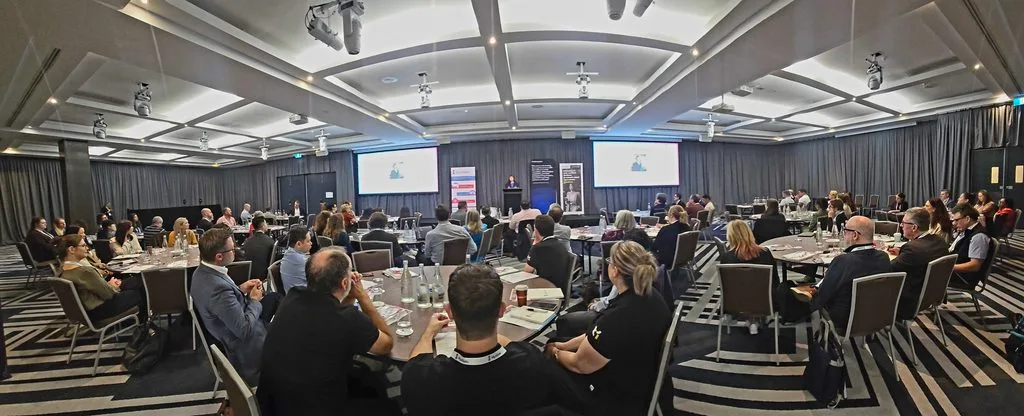
Supporting those journeys calls for greater cooperation and rigorous recognition of learning beyond traditional pathways. It also requires respect for the different purposes of education. Carolyn cautioned against treating skills as the only way to describe educational value, reminding participants that a connected system should preserve the diversity of institutions and the breadth of what learners gain.
From static records to living credentials
Teresa Tjia of the Victorian Tertiary Admissions Centre brought the discussion back to the person behind the qualification.
In Who I Am, Who We Are: Trust, Agency and the Living Credential, she explored the relationship between a learner’s ability to tell their own story and an institution’s responsibility to maintain a trusted record. Her examples invited participants to consider how credentials could communicate more of a person’s experience, capabilities and achievements.
Her concept of a living credential challenged participants to consider how recognition could become something people engage with throughout their lives, rather than retrieve only when applying for a job or further study. How could credentials reflect continuing development? How could institutions stay connected with learners whose journeys span multiple providers and workplaces?
Teresa’s invitation was to think collectively about what comes next: giving learners greater agency while preserving the verification and trust that make their records valuable.
Making recognition visible—and meaningful
Wendy Palmer of Lifelong Learning Practice explored another important distinction: a credential can be technically verifiable without clearly communicating what its holder can actually do.
Her keynote, From Credentials to Capability: Making Learning Visible Across Connected Journeys, asked participants to examine recognition from the perspectives of learners, educators and employers. Does the learner understand what the credential says about them? Is the claim supported by evidence? Can someone outside the issuing institution interpret it?
One line from her closing slides captured the risk:
“Visibility without meaning is digital glitter.”
Wendy introduced skills literacy as an essential part of addressing that gap: helping people recognise, articulate, evidence and translate their skills across different contexts. Her framework connected the ability to name and explain a skill with the evidence supporting it and the ways it could be applied in learning and work.
The practical message was to design recognition throughout the learner journey. Explain what learners will receive, make its meaning clear, and provide guidance on how it can be used afterwards. Just as importantly, ask learners what they have actually done with it—not only whether they collected or shared it.
Designing trust into smaller pieces of learning
Stuart Martin of George Angus Consulting examined the design of modular learning systems and the signals that help others trust the credentials they produce.
His session, Trust by Design, highlighted the challenge facing someone reviewing a credential without having witnessed the learning or assessment behind it. An attendance badge and a credential recognising assessed competence may appear similar unless their descriptions and supporting information make the distinction clear.
Stuart argued for assurance proportionate to the claim being made. A record of participation should say plainly what it represents. Claims about demonstrated skills require stronger evidence and validation, while credentials linked to credit, regulation or licensing need more rigorous assurance.
He also distinguished industry endorsement, which signals relevance to a sector, from independent quality assurance, which examines the rigour and consistency of the learning and assessment. The appropriate approach depends on who will read the credential, how far it needs to travel, and the consequences of getting the claim wrong.
Making more of what is already possible
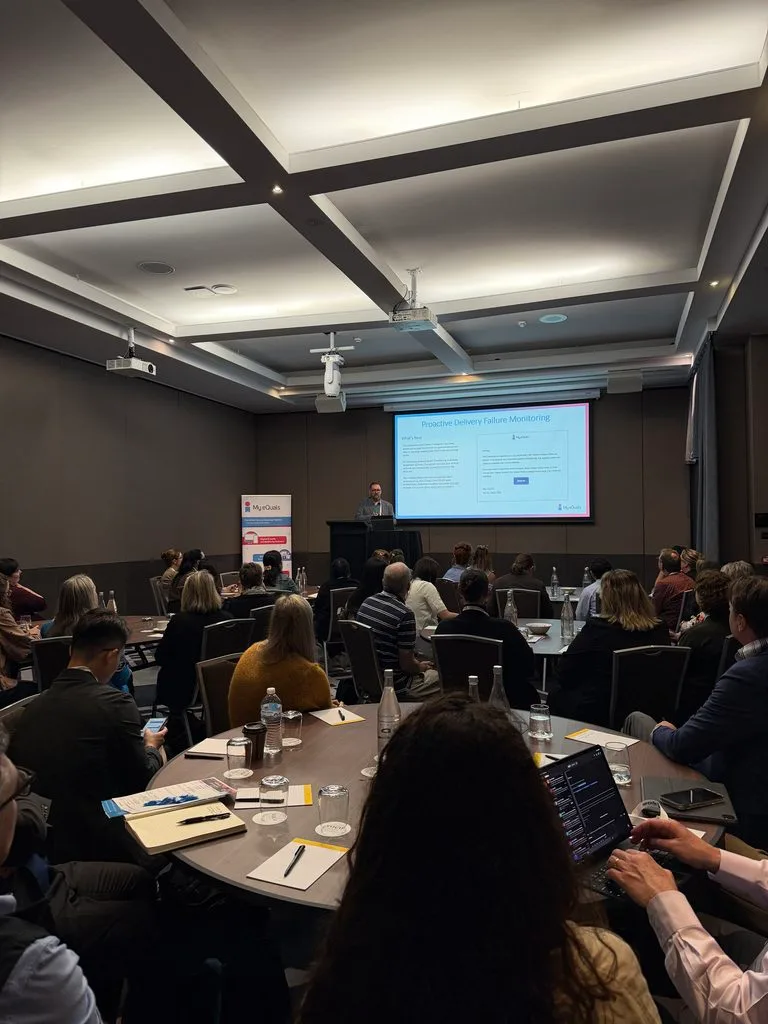
Anthony Manahan of HES brought the conversation into the day-to-day experience of institutions and learners. His session, What drives you nuts?… If only we could…, used participant feedback to explore practical frustrations and opportunities, from searching and reporting to automation, integration and the information learners would find useful.
An important distinction emerged: some improvements require new development; others involve making fuller use of existing My eQuals capabilities or changing institutional practice. Anthony revisited the My eQuals Receiving Portal, the Orders function for streamlining existing document charges, and scheduling tools that allow institutions to prepare credential releases in advance.
The discussion also challenged institutions to reconsider what they choose to issue. Historical academic records and records of work-integrated learning were among the examples explored. Rather than assuming that broader recognition must wait for a future platform enhancement, Anthony encouraged participants to ask what additional evidence would help their learners—and what their institution could already make available.
At the same time, expanding the learner record must preserve trust. The group considered whether self-declared information could have a place alongside institution-issued credentials. Anthony framed this as a question for further discussion, emphasising that any such information would need to be clearly distinguished from trusted, issuer-provided records.
Collaboration was central to his message. He pointed to the badges and microcredentials working group as an example of participant feedback shaping improvements, and invited further focused communities of practice around shared challenges. His session offered an immediate starting point for the wider ambitions discussed throughout the day: understand what is possible now, identify what would create value, and work together on what comes next.
Better communication, better student experiences
For a practical example of improving the journey after issuance, Kim Murphy and Shanelle Galea shared the Flinders University experience.
Their starting point was familiar: lengthy communications, uncertainty about when documents would arrive, notifications sent to university email accounts that graduates no longer checked, and a graduation team managing a heavy volume of enquiries.
Rather than looking for one large solution, Flinders focused on a series of changes. These included clearer communications, timely document release, students’ preferred email addresses, information at multiple points in the student journey, automatic seven-day reminders and quarterly follow-up campaigns. Frontline staff were also equipped to help students access, understand and share their credentials.
The results shared in the presentation were encouraging. Flinders’ reported pick-up rate increased from 88% in 2023 to 106% for 2026 year to date, while learner sharing increased from 19% to 30%. The pick-up figure can exceed 100% because returning graduates are also collecting documents issued in earlier years—not just newly issued credentials.
Behind the numbers was a human benefit. Kim described a graduation team able to move from an exhausting post-ceremony workload to a calmer, more manageable process. The lesson was that improving the learner experience and reducing administrative pressure can go hand in hand.
Bringing research capability into view
Deb Friel of Solving Plastic Waste Cooperative Research Centre demonstrated how digital badges can support recognition beyond conventional qualification pathways.
Her presentation explored how research outcomes can be translated into applied learning, with microcredentials helping build industry knowledge and digital badges making the resulting skills more visible in a learner’s profile. The examples connected sustainability research with capabilities relevant to researchers, industry partners and the wider community.
The breadth of those capabilities was striking. Alongside technical knowledge, Deb highlighted science communication, leadership, project management and professional profile development. The CRC’s Annual Industry Design Challenge provided an example of recognising collaborative problem-solving, design thinking, evidence-based decision-making and communication with industry stakeholders.
Her session illustrated how credentials can help make the skills developed through research and industry engagement easier to describe and share—not simply record that an activity took place.
What learner behaviour tells us about the future
Takis Diakoumis brought a network-wide perspective to the conversation in From Digital Records to Lifelong Recognition.
The figures in his presentation showed the scale My eQuals had reached: 133 issuing organisations and 15.6 million documents issued over the life of the network, as reported in August 2026.
But the more revealing story was what learners were doing with those records. The number of learners holding documents from multiple issuers grew from approximately 2,400 in 2018 to 225,000 in 2025. His presentation also showed growing return access and the use of profiles to bring different forms of evidence together for a particular purpose.
These patterns point towards a role for My eQuals that extends beyond a single institution or graduation milestone: supporting continuity as people accumulate and reuse evidence of learning.
Takis also drew an important distinction between engagement and recognition. A share or a view helps show that evidence is being used, but understanding whether it supported an admission, employment or other recognition decision is a further step. The opportunity is to look beyond issuance volumes and ask more about the value credentials create for learners.
Connecting credentials, credit and opportunity
Claire Field brought the day’s themes together through the changing demands of lifelong learning and credit recognition.
She described four reasons people return to learning: to maintain current knowledge, deepen expertise, pivot into an adjacent role or transition to a different occupation. Supporting those different needs requires more than a system organised solely around completing full qualifications and moving upwards through qualification levels.
Claire proposed that credentials need to do three jobs: prove that learning was achieved and assessed, translate its meaning for others, and enable the learner to move forward.
Her discussion of a National Credit Recognition Framework also highlighted the complexity behind apparently straightforward pathways. Qualifications with similar titles can contain different content, electives and assessment. Making evidence easier to exchange does not remove the need for institutional judgement about equivalence and readiness for further study.
As her presentation put it:
“Credentials are the evidence layer—not the decision engine.”
The goal is more transparent, learner-centred recognition that works in multiple directions and can operate at scale. Portability should make standards easier to understand, not lower them or require every institution to become the same.
Taking connected journeys forward
In their closing reflections, Jeremiah Allen-Juric and Dr Andrew Trnacek returned to the strength of collaboration between the sector, HES and Instructure, and the importance of ensuring that the credentials being issued carry genuine value.
The goal is not simply to issue more credentials. It is to help learning remain visible, trusted and useful throughout a person’s life.
Taken together, the day’s conversations pointed towards progress on two fronts: building better-connected systems and making the everyday experience of recognition clearer and more useful. Stronger evidence, more accessible records, better communication and collaboration all have a part to play.
Thank you to everyone who contributed their experience, questions and ideas to My eQuals Connect 2026.